01 /
Is Waslni a Bolt clone?
No. Bolt is a market reference, not a behaviour specification. Waslni provides one unified rider-and-driver app, permission-aware mobile admin tools, and a full web dashboard under your brand.
Waslni is not a Bolt clone. It is a configurable white-label platform with one mobile app for rider and driver modes, permission-aware quick admin inside the app, and a full web dashboard. App Experience can run rides, delivery and shops, or both.
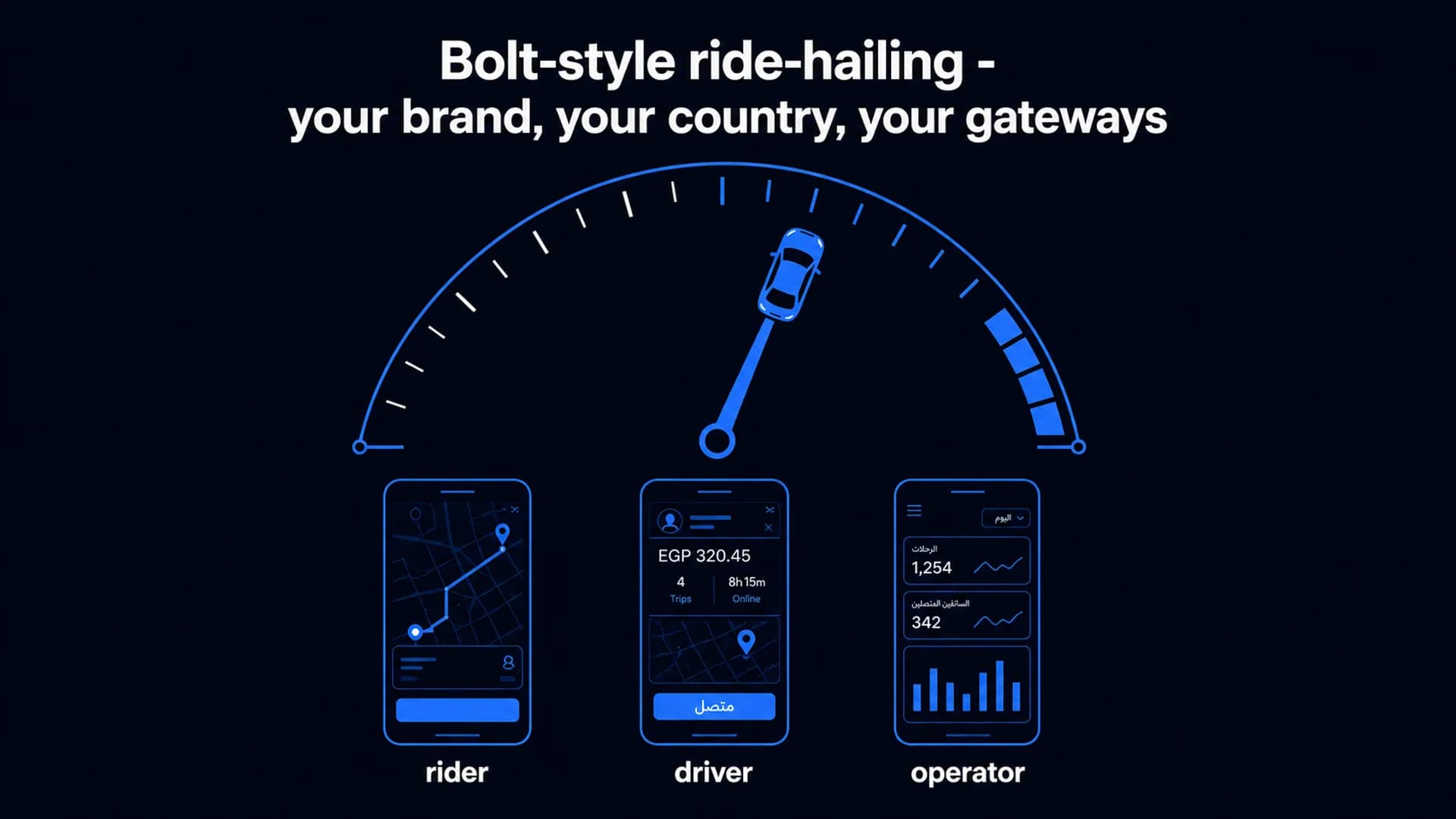
Bolt is often used as a reference for a simple customer journey and disciplined local operation. Treat that as product inspiration rather than a verified claim about its economics, commissions, staffing, or behaviour in every market.
A useful comparison looks beyond the booking screens. Review service configuration, fares, peak periods, registration, roles, permissions, driver communication, accounting records, and the responsibilities that remain with the operator.
Waslni gives operators configurable service types, fare rules, peak windows, commissions, permissions, and reports. These are Waslni capabilities under your own operating model; the product does not claim to reproduce Bolt behaviour.
Keep the mobile journey clear while giving authorised teams the controls needed to run the service.
The same branded app presents rider or driver tools according to the account role. Review the supported booking, payment, history, and rating flows in the live product.
Available work is filtered by service compatibility and search radius. Review the current notification, offer, acceptance, timeout, and manual-reassignment behaviour in the live product rather than assuming a proprietary Bolt algorithm.
The same branded iOS and Android app opens rider or driver mode after sign-in. This avoids maintaining and explaining multiple downloads.
Authorised staff handle quick tasks inside the app, while the web dashboard covers live operations, configuration, permissions, and wider oversight.
Per-km, per-min, base fare, minimum fare, peak multipliers per day-of-week per time-of-day. Admin-editable, no engineering required.
Admins define sections, fields, and supporting documents by service type and review submissions. The operator’s legal team decides the local requirements.
Apply the brand, choose the initial services, and define the service types the operation needs.
Configure service areas and supported base, distance, duration, and peak-period fare rules.
Connect a supported provider after merchant approval, compose registration fields, and test the payment methods selected by the operator.
Complete store submission and operating rehearsals, then release to a limited audience before expanding.
No. Bolt is a market reference, not a behaviour specification. Waslni provides one unified rider-and-driver app, permission-aware mobile admin tools, and a full web dashboard under your brand.
Supported commission settings can be configured for the service. Choose the rate from your own driver economics, customer pricing, tax, contracts, and local requirements rather than copying Bolt.
An operator can create a service type with its own name, capacity, fare settings, registration requirements, and service area. Any EV-specific eligibility automation or charging-partner workflow must be demonstrated and confirmed separately.
Waslni records trips, commissions, and wallet movements. The operator defines its settlement process and schedule according to provider support, driver contracts, and local accounting requirements.
Waslni is a hosted white-label platform with one branded mobile app, permission-aware administration inside it, and a full web dashboard. Hosting, release, support, and store-account responsibilities should be confirmed in the current agreement.
The Uber-style framing of the same platform.
Separate the supported ride core from market-specific extras.
See how Waslni implements rider and driver price offers.
The deeper architecture piece.
Review the unified app, mobile and web administration, App Experience, and required integrations in a live walkthrough.