Launch in the UAE

A ride-hailing service
for Dubai and beyond
configured around your operation.

Configure AED pricing, Arabic and English, emirate-specific operating areas, service types, and driver-registration fields. Supported payment providers are connected after the operator obtains the required approvals.

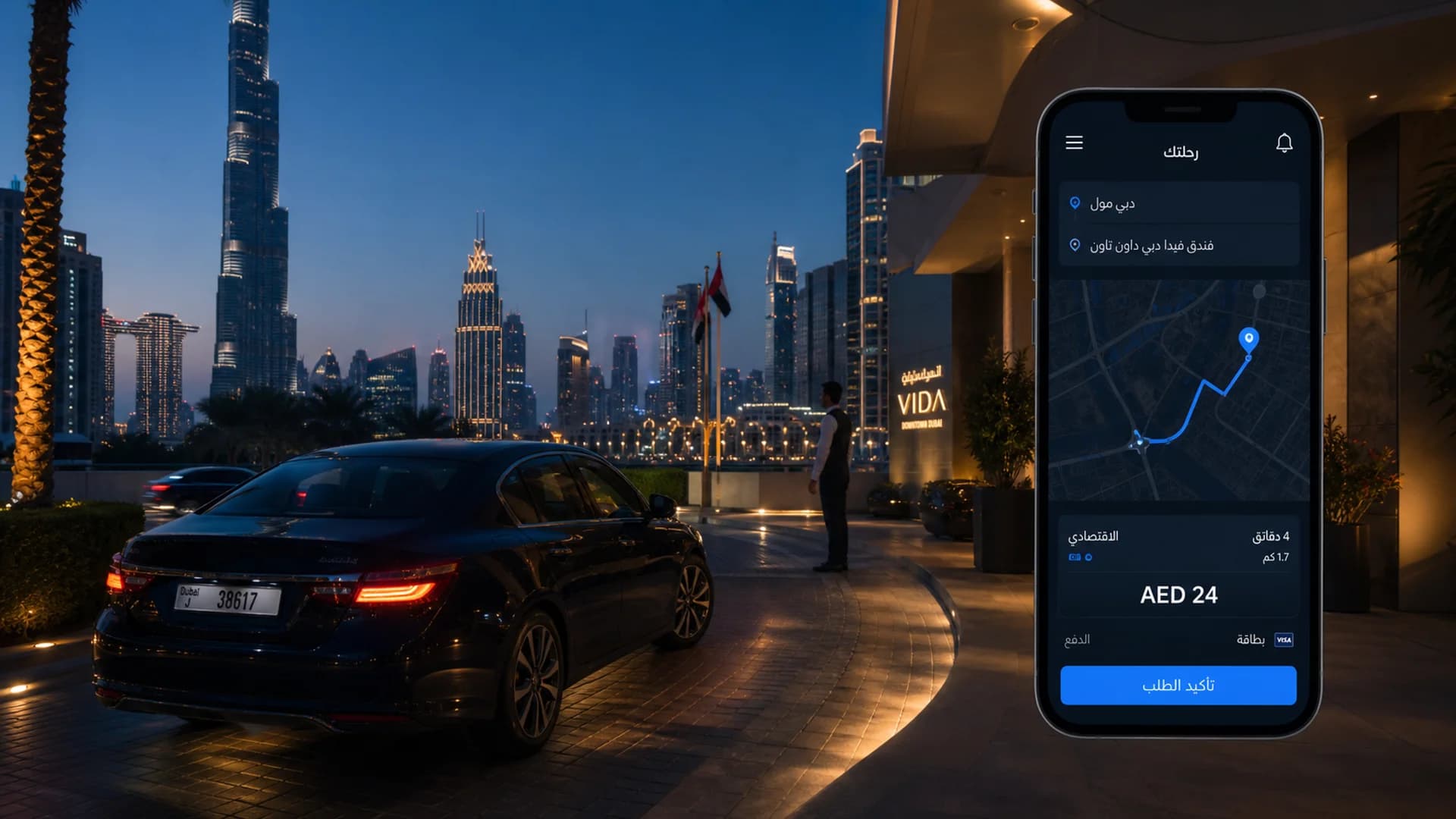
A Dubai blue-hour skyline with a modern sedan and an Arabic ride-booking screen
8
Bundled languages; each tenant exposes only those it enables
AED
Configurable local currency and fare rules
Configurable
Registration fields and operating permissions
4 steps
Configuration, validation, pilot, and release
By Waslni Editorial TeamPublished · Last updated · 8 min readUAE · MENA

UAE customers expect a reliable bilingual service, while each emirate may have different operating and approval requirements. The operator should validate documents, service areas, pricing, support, and payments before release.

That makes preparation more important than a launch-date promise. Operators need clear service areas, tested pricing, suitable registration fields, support procedures, and locally approved payment methods before opening the service to customers.

Waslni can be configured with AED pricing, Arabic and English, multiple operating areas, service types, and an admin-composed registration flow. Supported payment providers are connected only after merchant approval; licensing remains with the operator and its local advisers.
Configured for the UAE

What is preset
for the Emirates

01

Checkout.com connection

Connect Checkout.com after the UAE merchant account is approved and tested. Cash and the optional in-app wallet can be configured separately.

02

Configurable driver registration

Admins define registration sections, fields, and supporting documents by service type, then review submissions from the web dashboard. The operator’s UAE legal team determines the official requirements for each emirate.

03

Emirate-specific service areas

Define approved areas in Dubai, Abu Dhabi, Sharjah, Ajman, Ras Al Khaimah, or elsewhere with distinct fare and dispatch rules. Confirm eligibility before enabling each area.

04

Eight bundled interface languages

Choose the tenant-visible languages your audience needs, including English and Arabic with RTL, across the role-aware app and administration surfaces.

What ships

Three connected surfaces.
One operation.

Mobile app

One download for riders and drivers

The same branded iOS and Android app opens the right rider or driver mode after sign-in. Configure it for city rides and parcel delivery, a restaurant and grocery marketplace, or both.

Mobile admin

Quick control inside the app

Permission-aware admin tools let authorised team members handle urgent approvals, live operations, and support checks without switching to another app.

Web admin

Full control from the browser

Manage dispatch, users, service types, pricing, payment options, documents, roles, reports, shops, and content from the main web dashboard.

Launch sequence

From configuration
to a controlled pilot

01 /
Step 1

Brand and UAE settings

Apply the brand, set AED, choose languages, define operating areas, and select the initial App Experience.

02 /
Step 2

Services and registration

Configure service types, fares, operating rules, and registration fields approved by the operator’s local advisers.

03 /
Step 3

Payments and validation

Connect a supported provider after merchant approval and test every enabled payment, refund, and settlement flow.

04 /
Step 4

Controlled pilot

Submit the app for store review, start with a limited operating area, and validate dispatch, support, and finance before expansion.

UAE-specific questions

Plain answers
for the Emirates

01 /

Can I configure Waslni for the UAE?

Yes. Configure AED pricing, Arabic and English, operating areas, service types, registration fields, and supported payment integrations. The operator remains responsible for trade and transport licences and approved merchant accounts.

02 /

Do I need a UAE licence?

The operator must confirm trade, transport, data, insurance, and app-store requirements for each emirate with qualified local advisers. Waslni supplies configurable software and does not certify regulatory compliance.

03 /

What about UAE-PASS for rider authentication?

The mobile app uses phone OTP by default. UAE-PASS is not presented as an automatically active feature: if an operator requires it, scope, approvals, and technical integration must be confirmed as a separate implementation.

04 /

Can I run a women-only or premium service type?

The operator can configure service types, fares, eligibility fields, and visible content. Any assignment rule, local restriction, or approval must be confirmed and tested for the launch scope.

05 /

Do you handle road-toll integrations?

Do not assume automatic toll detection. A toll workflow needs a confirmed data source, fare rule, reconciliation method, and tests; otherwise the operator can manage an approved surcharge through its configured pricing rules.

Start in the UAE

Review the UAE setup,
before defining launch scope

Explore AED pricing, language defaults, the unified app, in-app administration, the full web dashboard, and App Experience settings.

Launch a ride-hailing service in the UAE — Waslni