01 /
How is Waslni different from a generic ride-hailing clone?
Waslni is a configurable platform rather than a fixed clone: each deployment has its own identity, data, service rules, App Experience settings, and supported integrations.
Waslni combines one role-aware rider-and-driver app, quick in-app operations, a full web admin panel, and configurable rides and delivery under your brand.
Most ride-hailing software is built once and resold everywhere. Waslni was rebuilt by the operators who use it every day — for MENA, with the constraints that actually matter on the ground.
Your app name, your icon, your splash, your URL. iOS and Android binaries published from your developer accounts. Riders and drivers never see Waslni.
The platform supports cash and regional gateway integrations including Paymob, Kashier, Fawry, and Lahza. A gateway is enabled only when it is supported for the market and configured with the operator's approved merchant account.
Right-to-left layouts, Arabic notifications, Arabic admin panel. Switch to English without a redeploy. Translators not required to keep the app readable.
Pricing, service types, fare formulas, surge windows, driver documents, content pages — all live-editable. No engineering team needed to change a rule, a copy, or a price.
Riders and drivers use one branded mobile app, with the tools changing to match the signed-in role. Permission-aware controls inside the app cover quick operational work, while the full web admin panel handles configuration and oversight.

Riders book trips and marketplace orders; drivers switch to their work tools to accept requests, navigate, manage documents, and review earnings. One download keeps both roles in one branded experience.
Authorized team members can access permission-aware operational tools without leaving the app. It is designed for fast day-to-day actions, not as a replacement for the full configuration panel.
Manage the app experience, service types, pricing, drivers, shops, orders, payments, roles, content, reports, and audit history from the browser.

See every driver and every trip in real time. Reassign rides manually when you have to. Cancel, refund, and credit, all with an audit trail.
Per-service pricing — taxi, car, van, motorcycle, delivery — each with its own base, per-km, per-min, minimum, and surge curve. Edit live.
Paymob, Kashier, Fawry, Lahza. Cash, card, wallet. Method tracked per trip. Refunds and partial refunds from the dashboard.
Track earnings per driver. Approve weekly or on-demand payouts. Export reconciliation reports. Hold a payout if a dispute is open.
Privacy, terms, rules, FAQ, banners — all editable from the admin panel without a code deploy. Two-language rollouts in one click.
SuperAdmin, Admin, Manager, Customer Service — each scoped to the screens and actions you choose. Add or remove a permission key from any role without a restart.
Every part of the platform was built with one question first: would a real operator in Cairo, Ramallah, Amman, or Riyadh actually use this? If the answer was no, the feature was reshaped until it was yes.
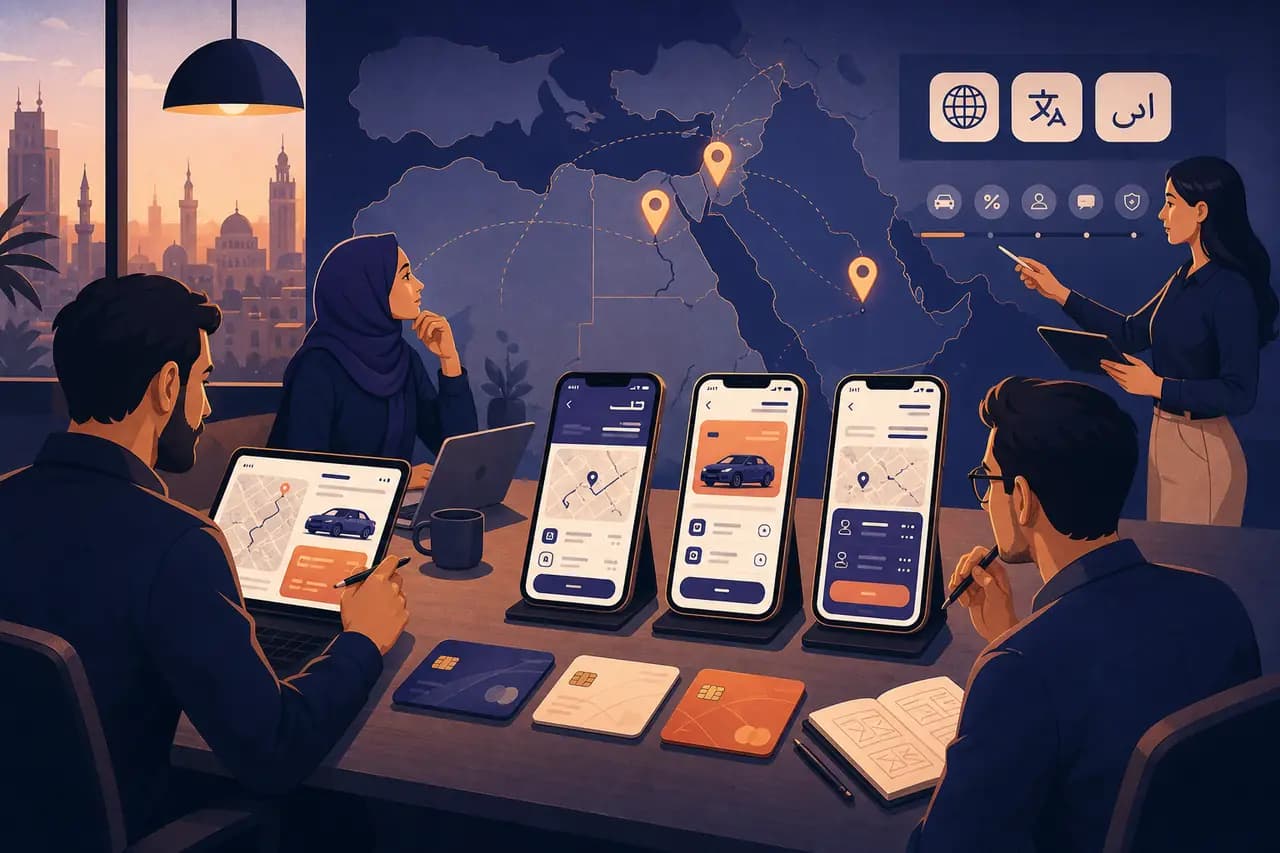
Arabic is the design baseline, not a translation layer. RTL layouts, Arabic dates and numerals, Arabic push notifications. English is the alternate, not the default.
Supported integrations include Paymob, Kashier, Fawry, and Lahza. Availability and activation depend on the country, the deployment configuration, and the operator's merchant approval.
Google Maps and Mapbox supported. Configure your map vendor per tenant. Address autocomplete tuned for Arabic place names.
Support, deploys, and incident response run on MENA business hours, not San Francisco hours. A pull request opened in the morning gets a reply the same day.
The platform is already built, but every rollout is scoped around the operator's brand, services, approvals, store accounts, and operational readiness.

Start a free 14-day demo with pre-seeded drivers, riders, and trips. Same platform as production — isolated, time-boxed, zero risk.
Set the app identity, service types, operating areas, pricing, roles, and App Experience mode for rides, delivery, or both.
Use your App Store and Play Console accounts, complete the required listing assets, and configure only the gateways approved for your merchant account.
Train the operating team, onboard an initial driver group, validate real workflows, and expand only after the service is ready.
Waslni is a configurable platform rather than a fixed clone: each deployment has its own identity, data, service rules, App Experience settings, and supported integrations.
Yes. Once your tenant is configured, day-to-day changes — pricing, service types, content pages, fare formulas, driver document lists, banners, permissions — happen inside the admin dashboard. A developer is only needed if you want to extend the platform itself.
A deployment can be configured for a country's currency, languages, maps, service types, and brand. Payment gateways and regulatory requirements must be reviewed for each market before launch, and the local operator remains responsible for the licences its service requires.
Cash can be configured, and supported gateways such as Paymob, Kashier, Fawry, or Lahza can be connected when available for the market and approved merchant account. The admin tools track trip methods, driver earnings, and payout workflows.
There is no fixed launch promise. Timing depends on configuration scope, branding assets, payment and merchant approvals, app-store review, local requirements, and the operator's readiness for a controlled pilot.
Every tenant runs on its own database. Trips, riders, drivers, and payments never touch another operator's data. Cross-tenant access by platform staff is logged in an audit trail.
Launch a working ride-hailing or delivery business — drivers, dispatch, payments, payouts, and admin included. Start a free 14-day sandbox: no credit card, no engineering, and no sales call to get in.