Uber Clone Demo Checklist: How to Test Software Before You Buy
A practical demo checklist for evaluating Uber clone software, exposing demo-only scripts, and testing the rider, driver, dispatch, payment, and admin workflows.
“Uber clone” is a useful search phrase, but a dangerous product brief. It can describe anything from a collection of attractive screens to a complete ride-hailing operating system. Both may look convincing in a sales demo. Only one can keep working when riders cancel, drivers reject trips, dispatchers take phone bookings, payments fail, and your team needs to resolve a live incident.
The right buying question is not “Does it look like Uber?” It is “Can this software run my transport company under my own brand?” This guide gives founders and taxi operators a practical way to answer that question before paying for a license, customization, or custom development.
What is Uber clone software?
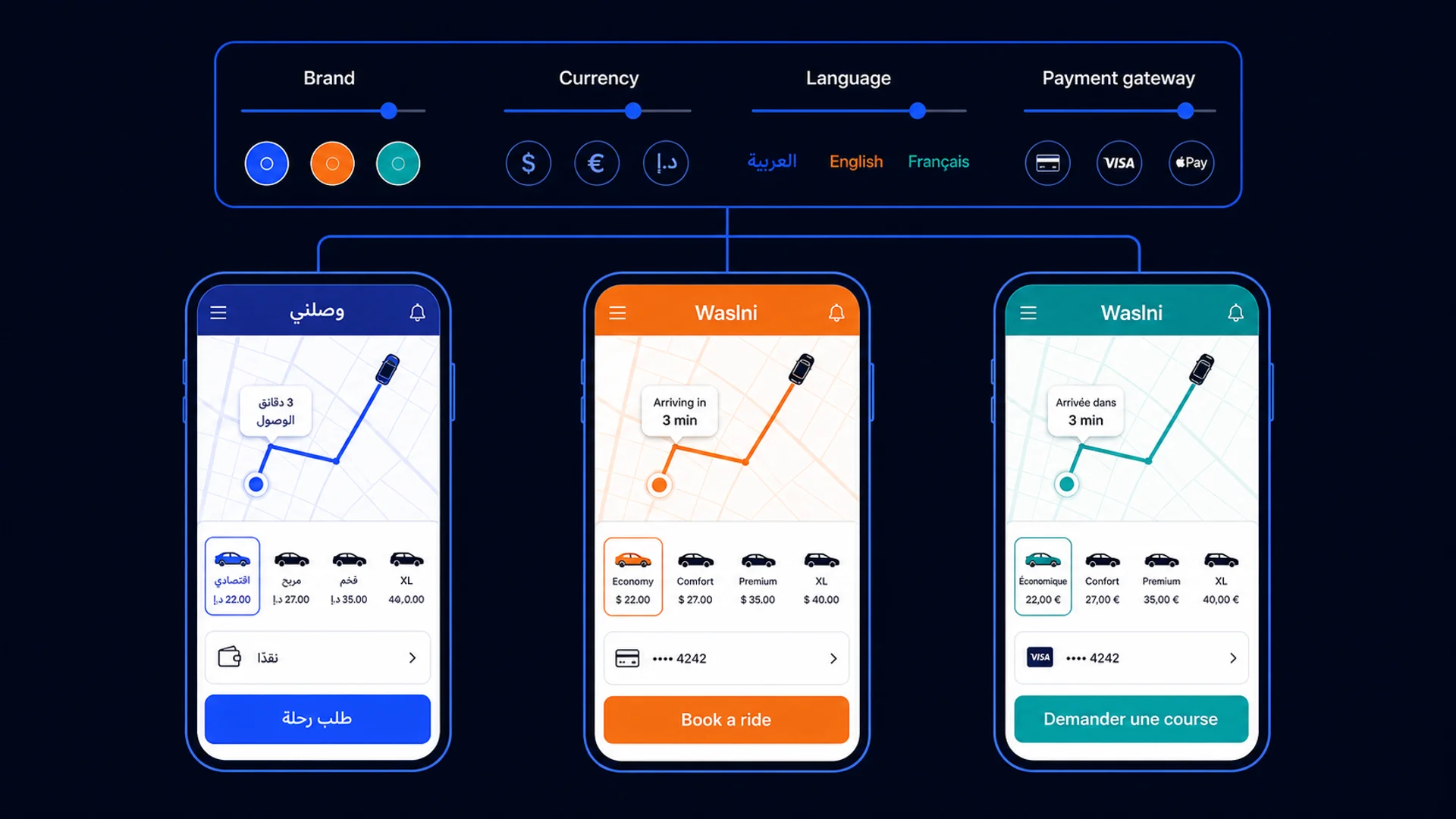
Uber clone software is a ready-made technology foundation for an on-demand transport service. A serious product connects rider booking, driver operations, maps, pricing, trip matching, notifications, payments, support, and administration. White-label deployment then applies your business name, colors, app identity, service types, operating areas, and market configuration.
That is different from copying Uber’s interface or business rules. Your city may need cash payments, phone dispatch, motorcycles, intercity trips, women-only services, zone pricing, scheduled rides, local payment gateways, or a different driver onboarding process. Good software supplies the operational foundation without forcing you to imitate another company’s market.
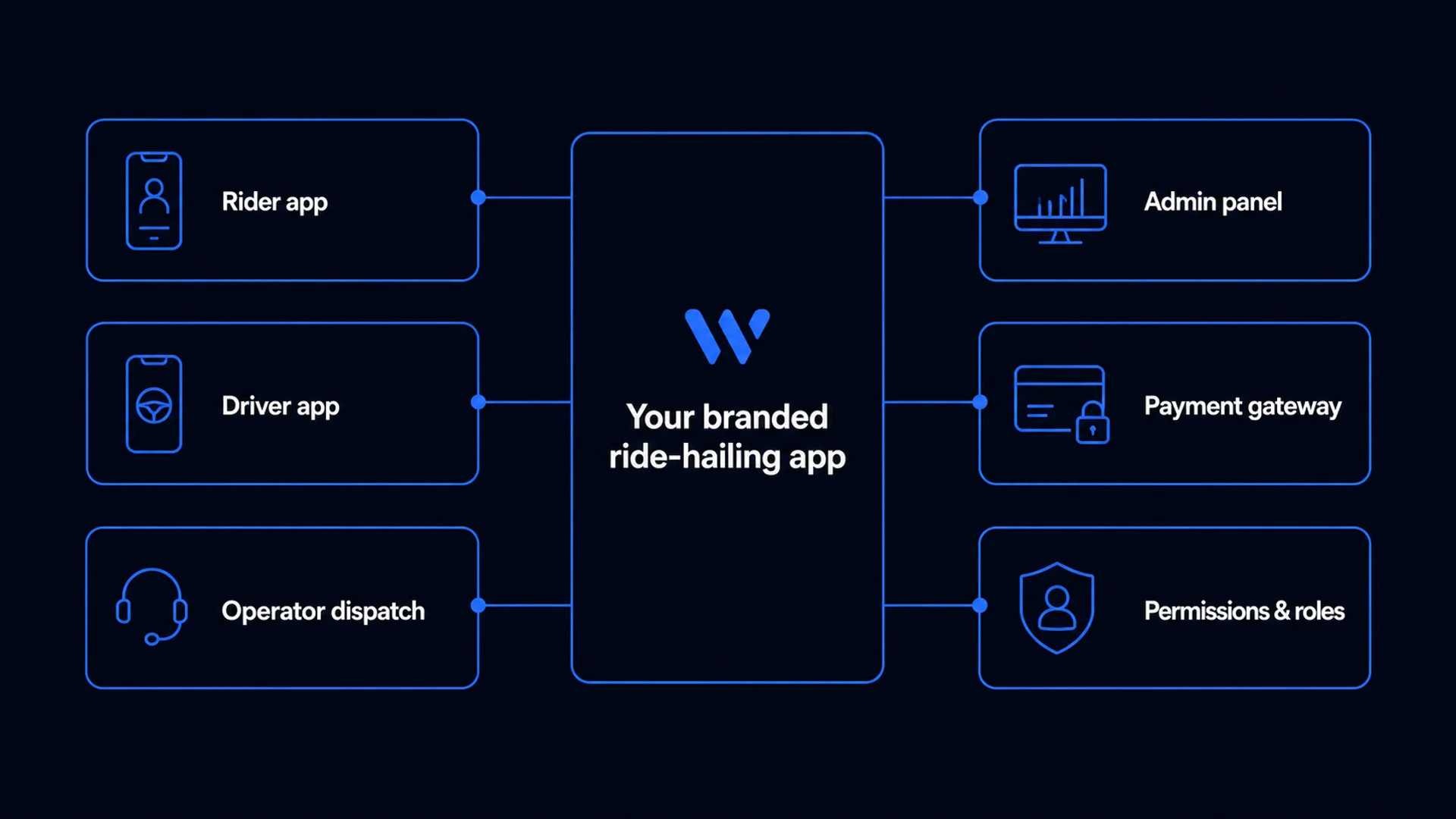
The four surfaces every serious platform needs
- Rider experience: registration, pickup and destination selection, fare visibility, booking, live trip status, payments, ratings, history, and support.
- Driver experience: onboarding, document submission, availability, trip offers, navigation context, status updates, earnings, and issue reporting.
- Dispatch operations: live fleet visibility, phone bookings, manual intervention, trip monitoring, cancellations, reassignment, and support context.
- Business administration: service types, pricing rules, zones, users, driver approval, roles, permissions, reports, payment configuration, and audit visibility.
If a vendor demonstrates only the rider booking flow, you have seen the easiest part. Ask to follow one trip through all four surfaces. Then ask what happens when the normal path breaks. Operational depth becomes visible in exceptions, not in the happy-path animation.
How to test an Uber clone demo properly
Do not spend the entire demo watching the vendor click. Use the product yourself and run a short operating scenario. Create a service type, change a price, register a driver, approve the required information, place a rider booking, reject it from one driver, accept it from another, cancel it, create a phone booking from dispatch, and inspect the resulting records.
- Can your team change common settings without opening a development ticket?
- Does the driver see enough information to make a clear accept-or-reject decision?
- Can support understand what happened from the admin record?
- Are roles and permissions specific enough for dispatchers, managers, finance, and customer service?
- Does the demo include realistic data, or is every screen empty until you configure it?
- Can the vendor explain what is standard, configurable, custom, or unavailable?
Uber clone script vs white-label ride-hailing platform
A clone script is often sold as source code for a one-time fee. That can be appropriate for a technical team that is prepared to audit, repair, host, secure, customize, and maintain it. The low purchase price is not the total cost. Real ownership begins when map APIs change, mobile stores require updates, a payment integration fails, or concurrency exposes a dispatch bug.
A managed white-label platform usually costs more than an unsupported script because it includes a maintained product, launch configuration, infrastructure guidance, and an ongoing update path. The tradeoff is less freedom to rewrite everything. For most operators, that constraint is useful: their advantage should come from supply, service quality, partnerships, pricing, and local execution rather than rebuilding standard trip logic.
What affects Uber clone software cost?
The credible answer is a scope, not a magic number. Price changes with branding depth, countries, languages, payment gateways, service types, business integrations, hosting, store publishing, data migration, support level, and custom workflows. Ask every vendor to separate the initial launch cost from recurring software, infrastructure, third-party, and support costs.
- Initial configuration, branding, and app-store preparation.
- Monthly or annual platform license and included environments.
- Maps, SMS, email, payment, storage, and other usage-based services.
- Hosting, monitoring, backups, incident response, and security updates.
- Custom integrations or workflows outside the standard platform.
- Post-launch support, upgrade policy, and response expectations.
The cheapest quote is not the lowest-cost launch. A reliable platform reduces the expensive surprises that appear after real riders and drivers arrive.
Red flags that should stop the purchase
- The vendor cannot show a working driver, dispatch, and admin flow in the same demo.
- Every market change is described as “easy” but never shown or documented.
- There is no clear answer about code ownership, data export, backups, or termination.
- The proposal hides recurring third-party and infrastructure costs.
- Security, permissions, payment failure, and store updates are treated as afterthoughts.
- The launch promise ignores driver recruitment, support preparation, pricing tests, and operational training.
A better launch plan than “copy Uber”
Start with one market, one clear customer problem, and the minimum service types needed to create reliable supply. Define the driver proposition, coverage area, pricing logic, payment methods, support hours, cancellation rules, and launch metrics before asking for custom features. The software should make that operating model executable.
Waslni is built around that approach: one branded, role-aware mobile app for riders and drivers, quick operational controls, a full web administration layer, dispatch, configurable services, payments, and room to add delivery or local commerce when the business is ready. The purpose is not to make your company look like Uber. It is to help your company launch and operate like a serious local platform.
FAQ: Is an Uber clone legal?
Building ride-hailing software with comparable functions is different from copying protected branding, artwork, text, or proprietary code. Use your own identity and obtain market-specific legal advice about transport licensing, privacy, payments, employment, and consumer rules. A software vendor can support configuration, but it cannot replace local legal approval.
FAQ: How quickly can an Uber clone launch?
A ready platform can reduce product development from months to a much shorter configuration and launch cycle, but software is only one dependency. Branding, payment approval, app-store review, driver onboarding, testing, training, and local licensing can affect the date. Ask for a milestone plan rather than an unsupported guarantee.
FAQ: Should I buy source code?
Buy source code when your team has a real reason to control and maintain the full stack. If your goal is to enter the market, validate demand, and operate reliably, a maintained white-label platform may offer a better balance of speed, cost, and technical risk.