How to Choose a White-Label Ride-Hailing Platform: 35 Questions for Vendors
A practical RFP checklist for comparing white-label ride-hailing vendors across product depth, branding, operations, security, pricing, launch, and long-term ownership.
White-label ride-hailing software can put years of standard product work behind your launch. It can also lock your business into a weak platform with attractive screenshots and expensive limitations. The difference is difficult to see when every proposal uses the same words: scalable, customizable, secure, real-time, and ready to launch.
A useful vendor evaluation replaces adjectives with evidence. Ask each company to demonstrate the same scenarios, answer the same commercial questions, and mark every requirement as available now, configurable, custom development, planned, or unavailable. This guide gives you that structure.
First, define what “white label” includes
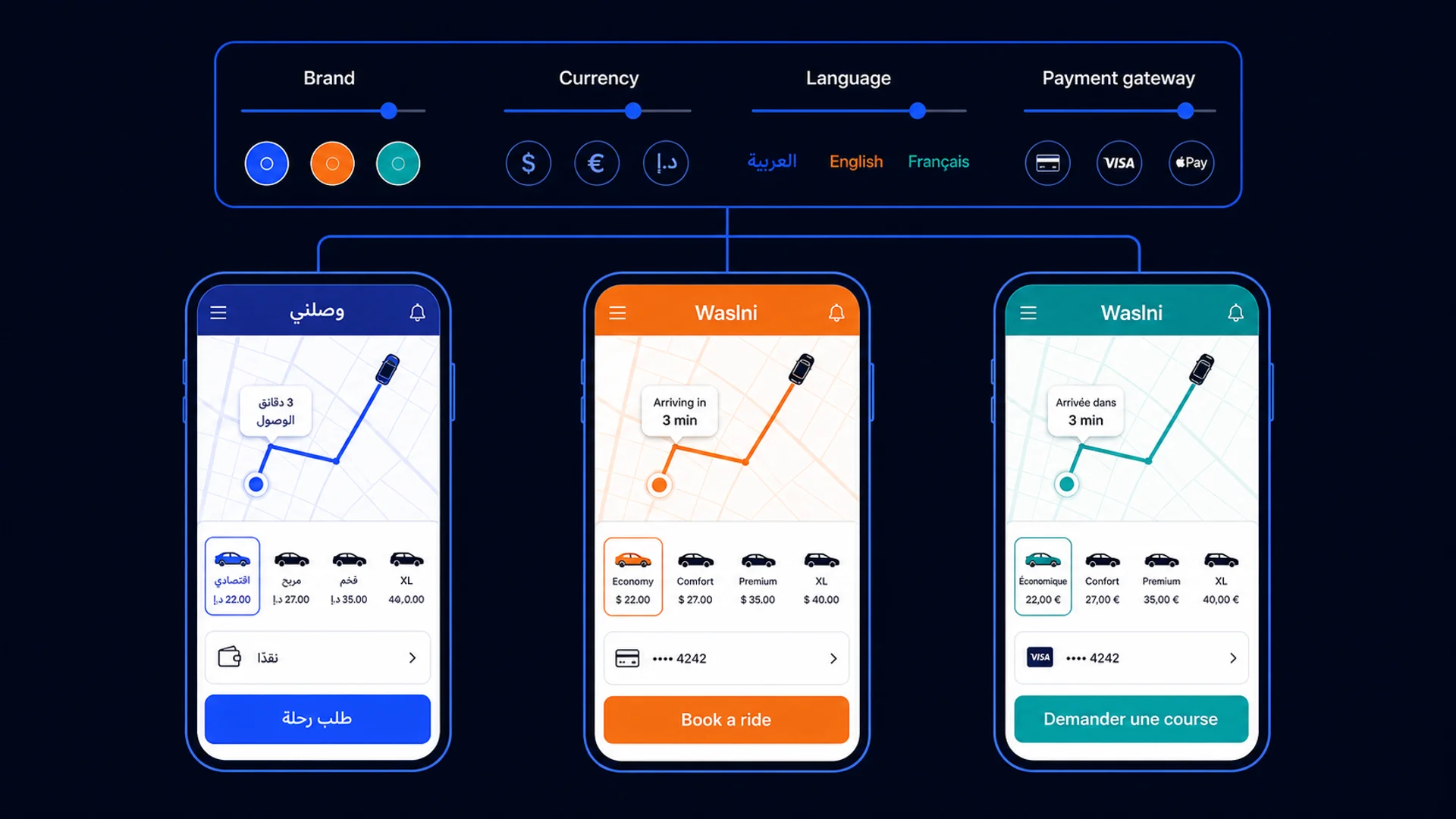
At minimum, white label should mean customers see your brand, not the software vendor’s. Confirm the app name, icons, colors, store listings, notification identity, email templates, public links, support details, legal pages, domains, and payment descriptors. Ask whether each item is included in the quoted package or charged as customization.
- Will the apps be published under our own Apple and Google developer accounts?
- Which visual elements can be changed without a new mobile release?
- Does the vendor name appear anywhere in the rider, driver, email, receipt, or store experience?
- Can each country or city have different services, payments, languages, and operating rules?
- Who controls domains, analytics accounts, map credentials, notification projects, and store access?
Product questions: test a complete trip
- Can riders book instant and scheduled trips, see price context, track status, pay, rate, and get support?
- Can drivers register, submit required information, go online, receive trips, update status, and view earnings?
- Can our team configure service types, vehicles, seat counts, prices, zones, cancellations, and availability?
- What happens when a driver rejects, times out, cancels, loses connectivity, or reaches the wrong pickup point?
- Can one role-aware app support rider and driver experiences without separate downloads?
Run one normal trip and at least three failure scenarios. A platform’s maturity is visible in rejected offers, duplicate actions, weak networks, payment errors, and support history. Record the demo so your operations and technical teams can review the same evidence later.
Operations questions: look beyond the apps
- Can dispatchers create bookings for callers and monitor the same live fleet?
- Can support search riders, drivers, trips, payments, and incidents quickly?
- Are permissions available for dispatch, customer service, managers, finance, and administrators?
- Is there an audit trail for sensitive changes and approvals?
- Can driver registration fields and required documents change without a mobile update?
- Which reports exist today, and can raw operational data be exported?
Many founders overvalue the rider home screen and undervalue the admin system. The rider may use the app for minutes; your team uses operations tools all day. A missing filter, permission, or support record becomes a recurring labor cost.
Technology and security questions
- How are tenant data, secrets, backups, environments, and staff access isolated?
- How are authentication, permissions, logs, encryption, vulnerability fixes, and dependency updates handled?
- What monitoring detects downtime, delayed jobs, failed notifications, or unhealthy services?
- What are the backup frequency, retention, restoration process, and last restoration test?
- How does the mobile update strategy separate safe software updates from changes requiring a new store release?
- Which parts of the stack are shared across customers, and which are dedicated?
Do not accept “bank-grade security” as an answer. Ask for architecture, operational controls, responsibility boundaries, and the response process when something fails. Your risk includes service continuity and access control, not only encryption.
Payments and local-market questions
- Which payment methods and gateways are working in our launch country today?
- Who owns the merchant account, funds, refunds, chargebacks, and settlement relationship?
- How are cash trips, commissions, driver balances, promotions, taxes, and fees recorded?
- Which languages are supported in the product, and who reviews the local copy?
- What market-specific licensing, invoice, privacy, or data-residency work remains our responsibility?
Commercial questions: reveal the total cost
- What is included in setup, branding, configuration, store submission, training, and launch support?
- Which fees recur monthly, annually, per trip, per driver, per order, or by usage?
- Which third-party costs are paid directly for maps, messages, payments, hosting, and app stores?
- How are custom requests estimated, accepted, tested, and maintained after future updates?
- What price changes are allowed at renewal, and what notice is provided?
- What service levels, support channels, response targets, and excluded incidents apply?
A transparent proposal separates standard product, configuration, custom work, third-party usage, and ongoing support. If those lines are blurred, the budget will be too.
Ownership and exit questions
- Who owns customer, driver, trip, payment, support, and analytics data?
- Can we export complete data in a usable format during and after the contract?
- What happens to apps, domains, merchant accounts, and store listings if we leave?
- How long is data retained after termination, and how is deletion confirmed?
- If source code is included, which repositories, licenses, build instructions, and deployment assets are actually delivered?
Score evidence, not promises
Create a weighted scorecard before the demos. Give the greatest weight to launch-critical workflows, operational control, local payments, reliability, and support. Give lower weight to features you might use years later. For each answer, store a link to a live demonstration, contract clause, documentation page, or written limitation.
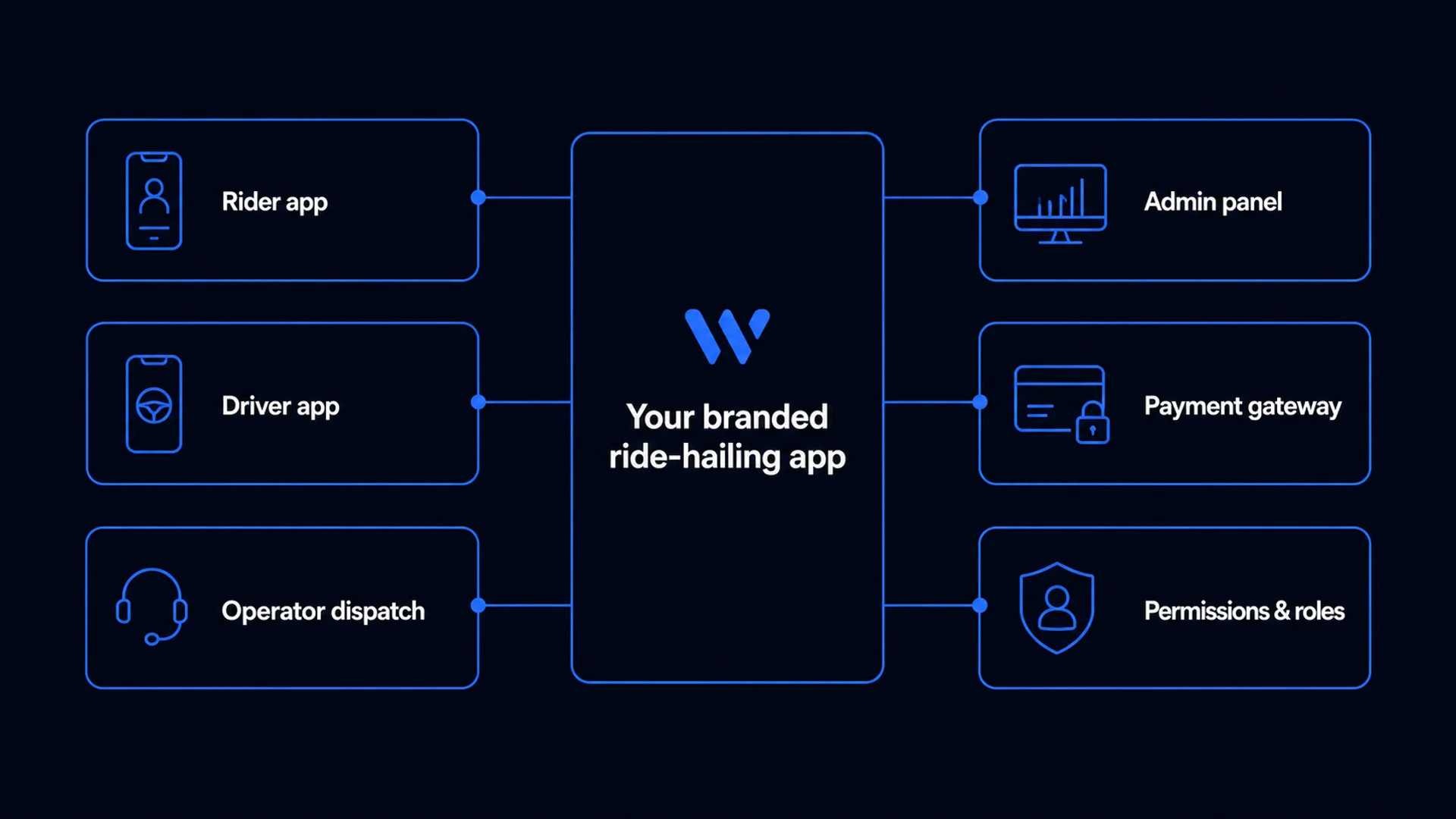
Waslni can be evaluated this way. The platform brings one branded rider-and-driver app, quick operational controls, full web administration, dispatch, configurable service types and registration, payments, shops, delivery, permissions, and tenant operations. Use the demo to verify your required workflow and use the commercial conversation to separate included configuration from any market-specific work.
FAQ: Is white-label software better than custom development?
It is usually better when your advantage is local operations rather than novel core technology. You launch on an existing foundation and focus investment on supply, demand, partnerships, and service quality. Custom development can be justified by highly unusual requirements, internal engineering capability, and enough budget and time to own long-term maintenance.
FAQ: Should the vendor provide source code?
Source code is valuable only if it is complete, buildable, documented, legally transferable, and maintained by a capable team. Data ownership, export rights, store-account control, continuity, and a clear termination process may protect an operator more effectively than receiving code it cannot safely run.