inDrive Clone Features: What to Scope Before You Buy
A buyer’s checklist for an inDrive-style ride-hailing product, including fare negotiation, driver choice, safety, dispatch, payments, and the questions a vendor demo must answer.

People searching for an inDrive clone are usually interested in one distinctive idea: the price can be negotiated instead of being dictated entirely by an algorithm. That idea sounds simple on a screen. In production it affects matching, driver attention, rider expectations, cancellations, fraud controls, support, analytics, and the economics of every trip.
Before asking a vendor to “add bidding,” define the operating model you want. A rider-proposed fare, a driver counter-offer, and rider choice among several drivers are three different capabilities. Your first version may need one, two, or all three. This checklist helps you separate them and buy the right scope.
What does “inDrive clone” actually mean?
An inDrive-style product is a ride-hailing service in which the rider and driver have more agency over price or driver selection than in a standard automatic-dispatch model. The exact workflow can vary. Some products let the rider suggest a fare but keep automated matching. Others let multiple drivers submit counter-offers. Another model shows nearby drivers with price, vehicle, rating, or arrival information so the rider chooses.
Do not use “bidding” as a catch-all term in a contract. Write the sequence: who enters the first price, which drivers receive it, what they can change, how long offers remain valid, what the rider sees, how one driver wins, what happens to the others, and when the final fare becomes locked.
Choose the fare model before choosing the interface
- Fixed or metered fare: the platform calculates or displays the price and drivers accept or reject the trip.
- Rider-proposed fare: the rider enters an amount, while the platform may validate minimums or recommended ranges.
- Driver counter-offer: eligible drivers can respond with another amount before the rider chooses.
- Suggested range: the platform gives market guidance while still allowing a proposal within defined limits.
- Hybrid rules: fixed pricing for some services or zones and negotiated pricing for others.
A hybrid model is often more practical than making every trip negotiable. Airports, corporate accounts, scheduled transfers, regulated taxi fares, or high-demand events may need predictable rules. The configuration should follow your licensing, supply, and customer promise rather than a competitor’s default.
Core rider and driver features
- Clear pickup, destination, service type, and trip notes before a fare is proposed.
- A recommended fare or allowed range that reduces unrealistic offers.
- Offer expiry and visible response status so riders are not left waiting without context.
- Driver response with accept, reject, or counter-offer according to the selected model.
- Rider comparison using relevant details such as fare, arrival estimate, vehicle, rating, and completed trips.
- A final confirmation that locks the chosen driver and agreed commercial terms.
- Consistent cancellation, no-show, support, rating, and payment flows after acceptance.
Driver choice must be designed carefully. Too little information makes the choice meaningless. Too much information slows the decision and can create unfair selection behavior. Decide which signals improve trust in your market, then test whether riders can choose quickly on a small screen.
The operational rules hidden behind negotiation
Negotiation creates states that standard dispatch does not have. An offer may be open, countered, accepted, expired, withdrawn, or replaced. Several drivers can be responding while the rider is considering another offer. The backend must resolve those events consistently so two drivers do not believe they won the same trip.
- Eligibility: which drivers receive an offer based on service, location, documents, status, or score.
- Rate limits: how often riders and drivers can change offers without creating spam.
- Price boundaries: minimums, maximums, recommended ranges, taxes, fees, and commissions.
- Timeouts: when offers expire and whether the search expands to more drivers.
- Concurrency: how the system closes every losing offer when one is accepted.
- Abuse controls: repeated low offers, coordinated manipulation, fake trips, and off-platform payment pressure.
- Support evidence: a timestamped record of every proposal, counter-offer, selection, and cancellation.
Dispatch and admin still matter
A consumer marketplace can still receive phone bookings, safety reports, payment disputes, and driver complaints. Your operations team needs live trip context, not just a list of completed rides. Ask whether dispatchers can see the original proposed fare, competing offers, the accepted fare, driver selection, and cancellation history.
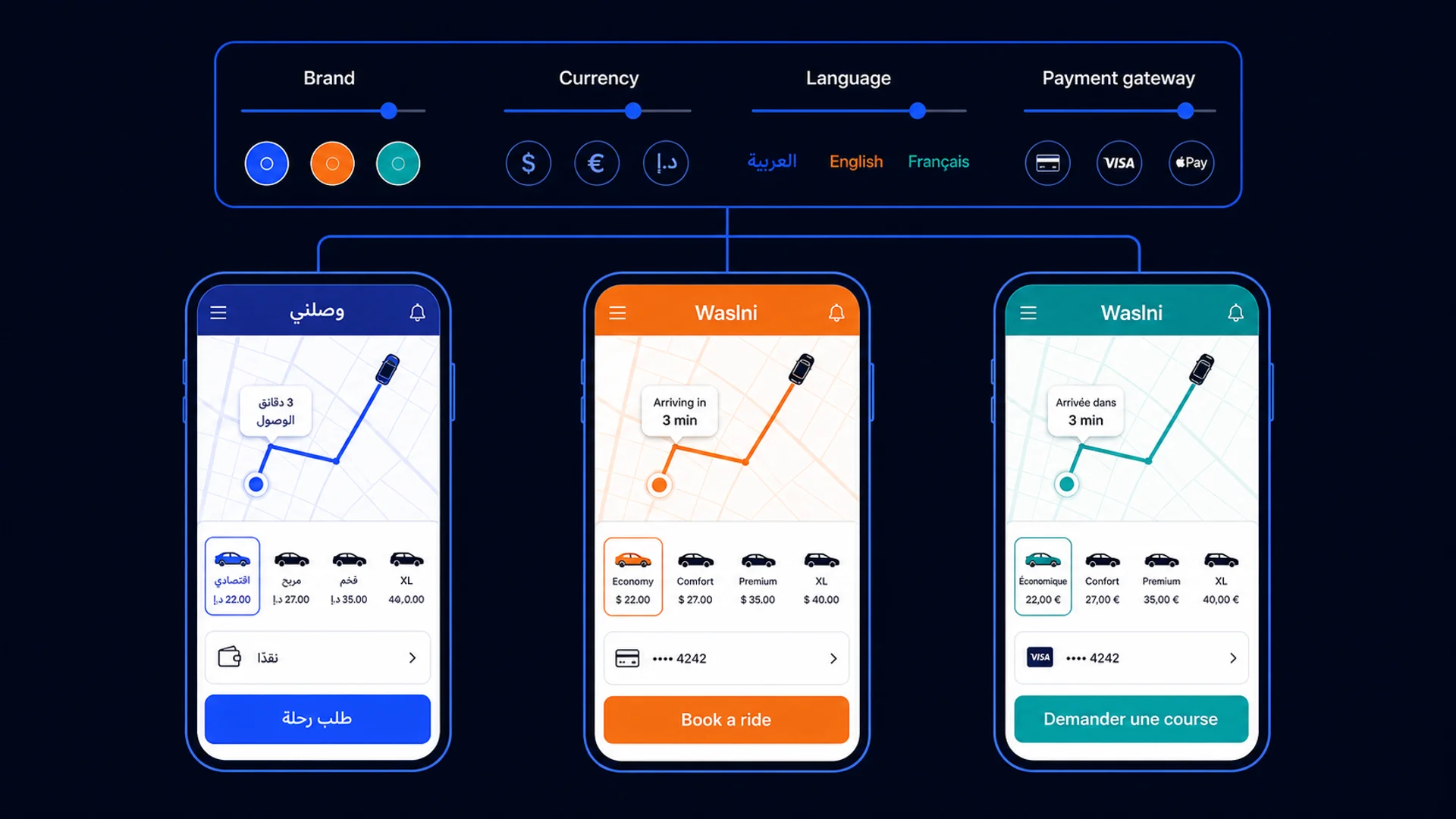
Admin configuration should define where negotiation is available, which service types use it, price boundaries, commission treatment, offer duration, driver eligibility, and permissions. If those rules are hardcoded, each market experiment becomes a development project.
Payments and commissions need an agreed fare
The final accepted amount must flow into the trip record, payment request, receipt, commission, driver balance, refunds, promotions, and financial reporting. Clarify whether tolls, waiting time, taxes, tips, or destination changes can alter it later. Cash makes weak records easier to ignore; card and wallet payments expose every mismatch.
Questions to ask in an inDrive clone demo
- Can you demonstrate the exact fare sequence we plan to launch, not a presentation about it?
- What happens when two drivers respond at almost the same time?
- Can negotiation be enabled by city, service type, zone, or customer segment?
- How are minimum fares, commissions, promotions, and payment capture calculated?
- What does support see when a rider disputes the agreed amount?
- Which parts are standard today, which require configuration, and which require custom development?
- How is the workflow tested under delayed networks and background mobile notifications?
Do not buy the word “bidding.” Buy a documented fare workflow that your riders, drivers, support team, and finance reports all understand the same way.
How Waslni approaches an inDrive-style project
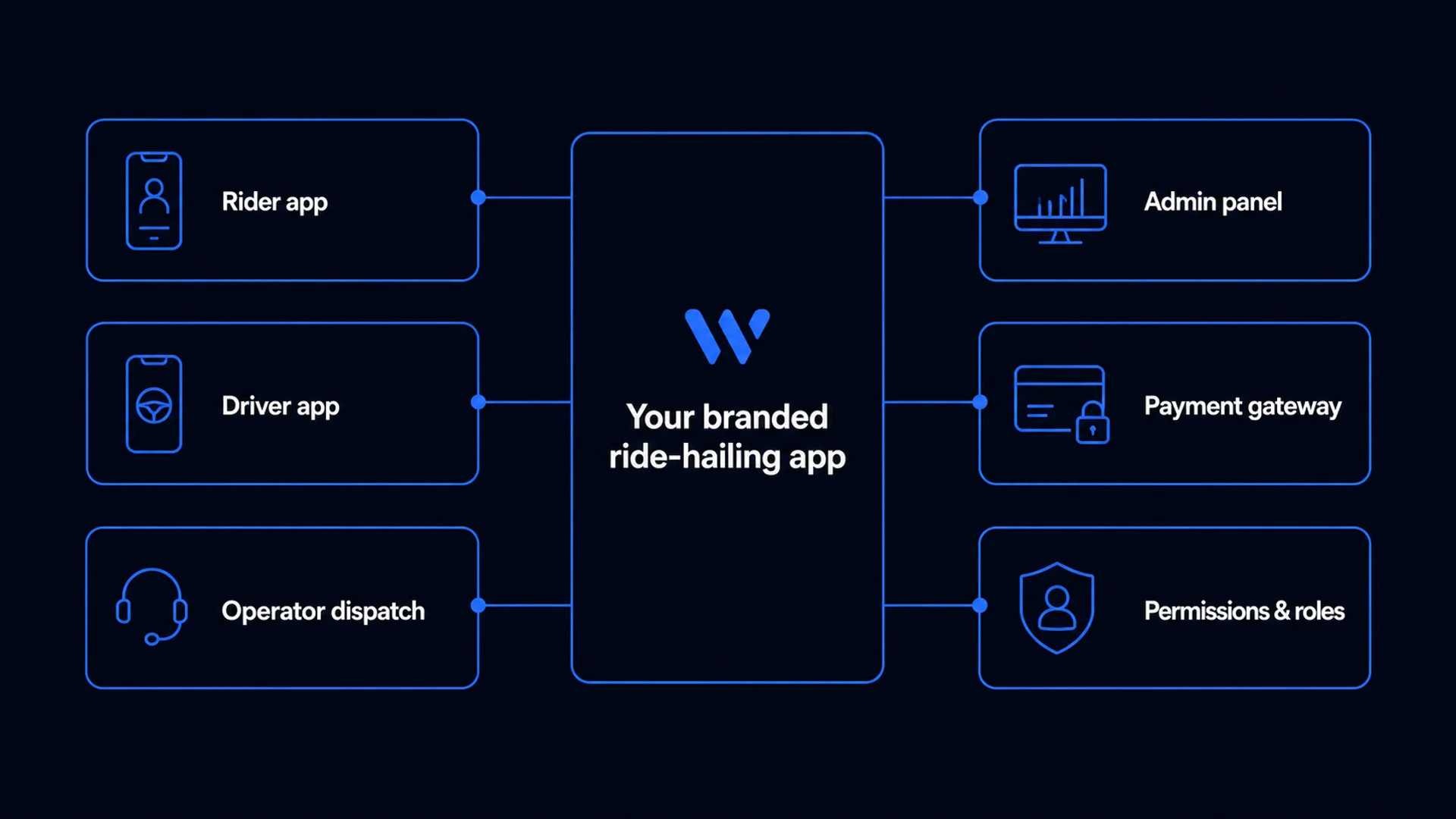
Waslni already provides the broader white-label foundation: rider and driver roles, service types, live operations, dispatch, payments, onboarding, permissions, and web administration. A specific fare-proposal or counter-offer model must be confirmed against your requested scope. Waslni does not present every possible negotiation behavior as identical out of the box, because those details should be demonstrated and contracted rather than assumed.
That honesty protects the launch. You can validate the standard platform first, identify the exact market advantage you need, and scope only the workflow that creates value. The result is your local service, not a vague copy of someone else’s product.
FAQ: Can Waslni launch an exact copy of inDrive?
Waslni can supply the core ride-hailing platform and evaluate an inDrive-style fare workflow, but “exact copy” is not a responsible promise. Fare proposals, counter-offers, driver selection, payment behavior, and market rules must be specified and demonstrated. Your branding and operating model should also remain your own.
FAQ: Is fare negotiation right for every market?
No. It works best when riders value choice, drivers can respond quickly, and the market accepts variable pricing. Regulated fares, low driver density, slow response times, or a strong promise of predictable pricing may make fixed or hybrid models better.
FAQ: What should the first release include?
Launch the smallest complete loop that expresses your advantage. That may be rider-proposed fares with driver acceptance, or counter-offers plus rider choice. Include the support record, price boundaries, payment calculation, cancellation rules, and admin configuration from day one; they are part of the feature, not later extras.